Introduction
It was during one of those rushed school mornings that I first noticed the problem. My daughter had been complaining about her shoes for weeks, but I had dismissed it as typical childhood grumbling. That particular morning, however, she sat on the edge of her bed, rubbing her feet and looking genuinely uncomfortable. As a parent, you learn to distinguish between minor complaints and real discomfort, and this felt different. The search for proper uf school shoes became more than just a shopping task—it became about finding something that would genuinely work for her active school days without causing the foot fatigue she’d been experiencing.
I remember thinking about how school shoes need to serve so many different purposes throughout the day. They need to look smart for classroom hours, withstand playground adventures, provide comfort during long periods of standing or walking, and somehow manage to stay presentable through it all. The challenge felt particularly acute with my daughter, who has always been more active than most and whose feet seemed to be growing at an astonishing rate. Finding uf footwear that could keep up with her needs while still meeting school uniform requirements felt like searching for a unicorn.
What I didn’t realize at the time was how much the right pair of shoes could transform not just her comfort, but our entire morning routine. The struggle to find shoes that worked had become a daily source of tension, with me insisting she wear what we had and her resisting because they genuinely hurt. It was one of those parenting dilemmas where you know there has to be a better solution, but you’re not quite sure where to find it.
Real-life Context
Our school has fairly strict uniform requirements, which include black shoes that must be worn every day. Like many parents, I initially gravitated toward whatever was affordable and looked presentable, without giving much thought to the technical aspects of children’s footwear. My daughter spends her days moving between classrooms, the playground, and various school activities, so her shoes need to handle everything from sitting quietly during lessons to running around during breaks.
Her previous shoes had started showing wear within just a couple of months, with scuff marks appearing on the toes and the soles beginning to separate at the edges. More concerning was how often she’d complain about her feet hurting by the end of the school day. I’d find her slipping them off the moment she got home, sometimes even on the car ride back. At first, I assumed this was normal—kids are always growing, after all—but when she started developing blisters and asking to stay home from school, I knew we needed to find a better solution.
The wide fit requirement became apparent when we visited a shoe store for a proper fitting. The salesperson pointed out that my daughter’s feet were slightly broader than average, which explained why standard-width shoes were causing discomfort. They’d squeeze her feet throughout the day, leading to the pain she’d been experiencing. This realization changed my approach to shoe shopping completely—it wasn’t just about size anymore, but about finding something that accommodated her specific foot shape.
School mornings had become increasingly difficult because of the shoe issue. What should have been a simple part of getting ready turned into a daily negotiation, with my daughter trying to find reasons to wear different shoes or complaining about how uncomfortable they felt. I started noticing that she’d walk differently in her school shoes, almost as if she was trying to minimize contact with certain parts of the footwear. It was clear we needed to find something that worked better for her particular needs.
Observation
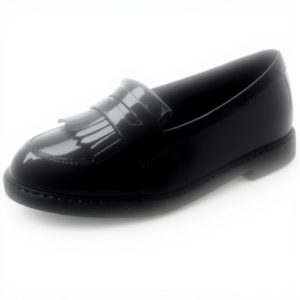
The first thing I noticed about the Clarks Scala Bright Y Wide Fit Loafer was how different they looked from other school shoes we’d tried. The glssy patent leather had a quality appearance that stood out immediately, but what really caught my attention was the way they were constructed. The wide fit designation wasn’t just marketing—you could actually see the extra room in the toe box area compared to standard shoes. When my daughter tried them on for the first time, she immediately commented on how they didn’t pinch her feet like her previous shoes had.
During those initial days of wear, I paid close attention to how they held up to her daily routine. The flexible rubber sole with its groove patterns seemed to move naturally with her foot, whether she was walking to class or running during playground time. I’d watch her from the school gate during pickup and notice how confidently she moved in them, without the slight hesitation I’d seen before when she seemed to be protecting her feet from discomfort. The non-marking sole also proved practical, as she could wear them indoors without leaving scuff marks on classroom floors.
What surprised me most was how well the patent leather maintained its appearance. After several weeks of daily wear, including rainy days and muddy playground adventures, they still looked presentable with just a quick wipe. The glossy finish seemed to resist scuffing better than the matte finishes on her previous shoes, which had started looking worn almost immediately. I found myself appreciating small details like the way the flex grooves in the sole allowed for natural bending without putting stress on the shoe’s structure.
The odor control feature became noticeable after a particularly active sports day when she’d been wearing the shoes for hours in warm weather. Unlike her previous shoes, which would have developed a noticeable smell after such intensive use, these remained fresh even after being worn all day. It was one of those features I hadn’t thought much about initially but came to appreciate as part of the overall comfort experience. The soft foam footbed seemed to provide consistent cushioning throughout the day, which I could tell made a difference in her overall comfort level.
Reflection
I didn’t realize at the time that finding the right school shoes would have such a broader impact on our daily lives. The morning struggles we’d been having weren’t just about footwear—they were about finding something that worked with my daughter’s specific needs rather than against them. The wide fit aspect, which I’d initially considered a minor feature, turned out to be crucial for her comfort throughout the school day. It made me reflect on how often we accept minor discomforts as normal when small adjustments could make significant differences.
There’s something valuable about understanding that children’s footwear needs to accommodate not just size, but activity level, foot shape, and the varied environments they move through during a school day. The Clarks uf shoes made me appreciate how technical features like flexible soles and proper width sizing aren’t just marketing points—they’re practical solutions to real problems children face. Watching my daughter move comfortably through her day made me realize how much we’d been compromising before, and how much better things could be with the right equipment.
The durability of the patent leather upper surprised me most in retrospect. I’d assumed that any school shoe would show significant wear within a few months, but these maintained their appearance far better than I expected. It made me think about the false economy of buying cheaper shoes that need replacing frequently versus investing in something that lasts through multiple growth spurts. The way the shoes have held up through daily use has changed my perspective on what constitutes value in children’s footwear.
Perhaps the most meaningful realization was how the right shoes affected my daughter’s confidence. She no longer hesitated when putting them on in the morning, and I stopped hearing complaints about foot pain at the end of the day. It was a reminder that comfort isn’t just about physical sensation—it’s about enabling children to focus on their activities and social interactions without being distracted by discomfort. The small victory of finding shoes that worked felt disproportionately significant in the context of our daily routine.
Conclusion
Looking back on our experience with finding proper school footwear, the journey taught me more than I expected about how small details can make substantial differences in daily life. The wide fit feature, which I’d initially considered somewhat specialized, turned out to be exactly what my daughter needed for comfort during long school days. The way the shoes have maintained their appearance and functionality through months of use has proven their value beyond the initial purchase.
The practical aspects of the uf school shoes—the flexible sole that moves with active feet, the odor control that keeps them fresh, the durable patent leather that resists scuffing—all contribute to making them a reliable choice for school wear. But beyond the technical specifications, what matters most is how they’ve eliminated the daily discomfort and morning struggles we’d been experiencing. They’ve become such a seamless part of our routine that I rarely think about school shoes anymore, which is perhaps the highest compliment I can pay them.
What started as a solution to a specific problem has become our standard for what school footwear should provide. The combination of practical features and comfortable fit has made these shoes work for everything from classroom hours to playground adventures, proving that it’s possible to find footwear that meets both uniform requirements and active children’s needs. They’ve lasted through growth spurts and seasonal changes, maintaining their functionality and appearance throughout.
For parents facing similar challenges with school footwear, the experience has taught me that paying attention to fit and construction details matters more than I initially understood. The right shoes can transform not just comfort, but the entire experience of school days for active children. Finding something that works with their needs rather than against them makes all the difference in creating positive daily routines and eliminating unnecessary discomforts.