Introduction
I never thought much about my shoes until recently. They were just something I put on each morning, a practical necessity rather than something I considered carefully. That changed when I started paying closer attention to how my feet felt throughout the day, particularly during those longer walks between meetings or while running weekend errands. The difference between shoes that merely cover your feet and those that actually support them became increasingly apparent with each passing week. It was during this period of heightened awareness that I began wearing the Clarks Aldwin lace-up shoes, and what started as simple footwear selection turned into a more thoughtful consideration of how small details in design can significantly impact daily comfort.
There’s something about the way we move through our days that we often take for granted until discomfort forces us to notice. I’ve always been someone who appreciates well-made things, but I’ll admit footwear rarely made it to the top of my consideration list. The turning point came during a particularly busy month when I found myself constantly on my feet, transitioning between office settings, coffee shops, and evening gatherings. My usual shoes left my feet aching by day’s end, and I started noticing how frequently I was thinking about my discomfort rather than focusing on the tasks or conversations at hand. That’s when I decided to be more intentional about what I put on my feet each morning.
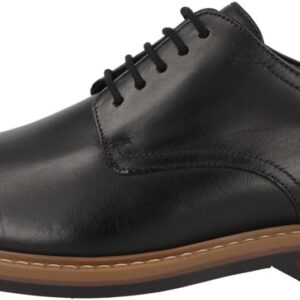
What struck me initially about the Clarks Aldwin shoes was their unassuming appearance. They didn’t scream for attention or promise revolutionary comfort through flashy marketing claims. They simply looked like well-constructed shoes that might hold up to regular use. The stitch detailing around the edges suggested careful craftsmanship, while the lace-up design appeared straightforward and functional. I appreciated that they came in multiple color options, including the black leather pair I selected, which seemed versatile enough for various occasions without drawing unnecessary attention. Sometimes the most reliable things in life don’t need to announce themselves loudly.
Real-life Context
My typical week involves more walking than most people might assume. I live in a neighborhood where driving everywhere feels unnecessary, so I often walk to the grocery store, to local cafes for work sessions, and to friends’ houses for casual gatherings. My professional life requires me to move between different locations throughout the day, from formal office environments to more relaxed creative spaces. I need shoes that can handle pavement, occasional grassy patches, office carpets, and everything in between without making me conscious of my footwear with every step. The transition from one setting to another should feel seamless, both in terms of appearance and physical comfort.
Before settling into a routine with the Aldwin shoes, I’d been rotating between several pairs that each had their limitations. One pair looked appropriate for business settings but lacked sufficient support for longer walks. Another felt comfortable initially but showed wear quickly, with soles that became slippery on wet surfaces. I found myself making excuses to avoid walking certain distances or planning my day around minimizing time on my feet. It was frustrating to feel constrained by something as basic as footwear, especially when I had places to be and people to see. The practical demands of my schedule required shoes that could keep up without demanding constant attention or adjustment.
The first time I wore the Aldwin shoes was on a Tuesday that involved back-to-back meetings across different parts of the city. I started at my home office, walked fifteen minutes to a coffee shop for a morning collaboration session, took public transportation downtown for lunch with colleagues, then walked another twenty minutes to a client meeting in the early afternoon. By the time I headed home around six o’clock, I’d been in these shoes for nearly ten hours with various periods of sitting and walking throughout. What stood out that first day wasn’t any single remarkable feature but rather the absence of the foot fatigue I’d come to expect from similar days in other shoes.
Over the following weeks, I found myself reaching for the Aldwin shoes more frequently, not because they were new but because they reliably performed without fuss. They became my default choice for days that involved mixed activities and uncertain terrain. Whether I was navigating crowded sidewalks during rush hour, standing in line at the post office, or walking through parks on weekend afternoons, these shoes provided consistent performance without requiring special consideration. The true test came during a particularly hectic week when I had multiple deadlines and found myself constantly moving between locations with little downtime. The shoes became an unnoticed support system rather than another thing demanding my attention.
Observation
What I began to notice after several weeks of regular wear was how certain design elements contributed to the overall experience in subtle but meaningful ways. The lace-up fastening, which I initially viewed as a basic functional feature, actually allowed for precise adjustment that accommodated the natural swelling feet experience throughout the day. On warmer afternoons when my feet tended to expand slightly, I could loosen the laces just enough for comfort without compromising security. On cooler mornings, I could achieve a snugger fit that kept my feet properly positioned within the shoes. This customizability became something I appreciated more with each wear, though I rarely had to readjust once I found my preferred tightness.
The thermoplastic rubber outsole revealed its value gradually through various conditions. During a sudden rainstorm one afternoon, I noticed better traction on wet pavement than I’d experienced with previous shoes. The layered ‘leather’ effect on the outsole wasn’t merely decorative—it provided reliable grip without the stiffness that sometimes accompanies durable soles. I found myself walking more confidently on slippery surfaces, whether it was polished office floors or damp brick pathways. The durability also became apparent as weeks turned into months with minimal visible wear, despite near-daily use. The shoes maintained their structural integrity through all kinds of urban terrain without developing the uneven wear patterns I’d seen in other casual shoes.
Small details like the heel loop, which might seem insignificant at first glance, actually proved quite practical in daily use. When I was rushing out the door or taking shoes off quickly upon returning home, that small loop made the process noticeably easier. It’s one of those features you don’t think about until you experience its convenience, then find yourself missing it when wearing other shoes. Similarly, the stitch detailing that initially caught my eye maintained its appearace over time, suggesting careful construction that went beyond superficial aesthetics. These elements worked together to create footwear that performed reliably without drawing attention to itself—exactly what I needed for my varied schedule.
I observed how the shoes adapted to different contexts throughout my days. In professional settings, their clean lines and understated design looked appropriate without being formal. During casual weekend activities, they provided the comfort and flexibility needed for spontaneous walks or standing conversations at outdoor events. The transition between these different environments felt natural, with the shoes blending into each context rather than announcing their presence. This versatility became increasingly valuable as I moved through weeks filled with diverse activities and social situations. The shoes supported my movements without ever becoming the focus of my attention, which is perhaps the highest compliment I can give to everyday footwear.
Reflection
I didn’t realize at the time how much mental energy I’d been spending thinking about my footwear until I stopped needing to think about it at all. The absence of discomfort became its own form of comfort—a quiet reliability that allowed me to focus on more important matters throughout my day. This realization came gradually, emerging not from any single moment but from the accumulation of days when my shoes simply performed their function without demanding my attention. There’s something valuable about tools—whether shoes, bags, or other everyday objects—that work so seamlessly they become extensions of ourselves rather than separate items we must manage.
Reflecting on this experience made me consider how we often overlook the relationship between physical comfort and mental focus. When our feet hurt or our shoes require constant adjustment, part of our awareness remains tied to that discomfort, subtly draining cognitive resources that could be directed elsewhere. With the Aldwin shoes, I found myself less distracted by physical sensations in my feet, more present in conversations, and more engaged with my surroundings. This wasn’t a dramatic transformation but a gradual shift in awareness—the kind of change you notice in retrospect rather than in the moment. Sometimes the most significant improvements in daily life come from eliminating small irritations rather than adding new pleasures.
The concept of ‘everyday durability’ took on new meaning as I continued wearing these shoes through various conditions. I began to appreciate how certain materials and construction methods contribute to longevity without sacrificing immediate comfort. The thermoplastic rubber outsole, for instance, maintained its flexibility while showing remarkable resistance to wear. The leather upper developed a subtle patina over time rather than showing obvious signs of deterioration. These characteristics spoke to a thoughtful approach to design that considered both short-term comfort and long-term usability. I found myself wondering why more everyday items aren’t designed with this dual perspective in mind.
My experience with these shoes also prompted reflection on how we evaluate value in consumer products. The initial price point felt reasonable, but the true value revealed itself through consistent performance over months of regular use. I stopped calculating cost per wear because the shoes simply became part of my daily routine—reliable, comfortable, and appropriate for most situations. This contrasted with previous footwear purchases that either provided short-term comfort with limited durability or required breaking-in periods that never quite ended. The Aldwin shoes offered immediate usability that actually improved with familiarity, as the materials adapted slightly to my foot shape and walking patterns.
Conclusion
Looking back on these months of regular wear, what stands out most isn’t any single feature or dramatic moment but the consistent reliability these shoes provided through countless ordinary days. They became my default choice not because they were exceptional in any obvious way but because they performed their function so seamlessly that I stopped thinking about them altogether. The true measure of good everyday footwear might be how little you notice it during your daily activities—how it supports your movements without drawing attention to itself. The Clarks Aldwin shoes achieved this balance through thoughtful design elements that worked together rather than relying on any single revolutionary feature.
The experience reinforced my appreciation for products that prioritize subtle refinement over flashy innovation. Sometimes the most meaningful improvements come from perfecting basic elements rather than introducing unnecessary complexity. The secure lace-up design, durable outsole, convenient heel loop, and crafted appearance each contributed to the overall experience without any single element dominating. This harmonious integration of features resulted in footwear that felt greater than the sum of its parts—shoes that simply worked well day after day without demanding special consideration or care.
I’ve come to view these shoes as representative of a particular approach to design—one that values longevity, versatility, and understated quality over temporary trends or exaggerated claims. They don’t promise transformative experiences or revolutionary comfort, but they deliver consistent performance through the varied rhythms of everyday life. In a world filled with products competing for attention through bold promises and flashy features, there’s something deeply satisfying about items that focus instead on reliable execution of their core function. The Aldwin shoes remind me that sometimes the most valuable things in our daily lives are those we notice least—the quiet supporters that enable us to focus on what truly matters.
My journey with these shoes has been less about discovery and more about appreciation—recognizing how thoughtful design can enhance ordinary experiences in subtle but meaningful ways. They haven’t changed my life dramatically, but they’ve made my days slightly more comfortable and my movements more effortless. In the end, that might be the most we can ask from everyday objects—that they perform their function so well that we’re free to forget about them and focus instead on the people, places, and experiences that give our lives meaning. The Clarks Aldwin shoes have provided exactly that kind of quiet reliability, becoming trusted companions through the unremarkable but important moments of daily living.