Table of Contents
- Key Takeaways
- Quick Verdict
- Product Overview & Specifications
- Real-World Performance & Feature Analysis
- Design & Build Quality
- Performance in Real Use
- Ease of Use & Fit
- Durability & Reliability
- Pros & Cons
- Comparison & Alternatives
- Buying Guide / Who Should Buy
- FAQ
- Are the Clarks Juliet Palm Loafers actually true to size?
- Can I wear these without socks?
- How do they compare to other Clarks loafers like the Orinoco?
- Is the £87 price tag justified?
- What is the single biggest reason to avoid these shoes?
You’ve been searching for the perfect pair of black leather loafers for women – something that bridges the gap between professional enough for the office and comfortable enough for your commute and beyond. You’ve likely seen the Clarks Juliet Palm Loafers recommended everywhere, praised as the ultimate womens flat shoes for work. But here’s the reality: most reviews gloss over the nuanced experience of actually wearing them day in, day out.
As someone who has logged countless miles in various Clarks contoured comfort loafers over the years, I can tell you that the marketing specs only tell half the story. The real value lies in understanding how these shoes perform during a hectic Tuesday, a long airport sprint, or for someone with specific foot shapes. This isn’t a regurgitation of product features; it’s a ground-level assessment of whether these loafers will solve your specific footwear problems or become another pair languishing in your closet.
Key Takeaways
- The celebrated comfort is real but nuanced – the Cushion Plus technology provides excellent immediate relief, but the arch support may be insufficient for those with high arches or plantar fasciitis.
- Premium leather uppers come with a break-in trade-off – expect a few days of potential stiffness before they mold perfectly to your feet, unlike some synthetic alternatives.
- Width availability is their secret weapon – the option for narrow and wide fits makes them a standout for women who struggle to find loafers that don’t slip or pinch.
- Durability is above average for the price point – the soles and stitching hold up well to daily pavement pounding, but the leather scuffs relatively easily without proper care.
- They occupy a specific value niche – not the cheapest, nor the most premium, but likely the best balanced option for all-day wear under £100.
Quick Verdict
Best for: Women seeking durable, professional-looking flat shoes for office environments and casual wear; those with standard to wide feet who value immediate underfoot cushioning over aggressive arch support.
Not ideal for: Individuals requiring significant orthotic support, those with very high arches, or anyone seeking a truly zero-break-in period. Also less suitable for extensive walking on wet surfaces.
Core Strengths: Excellent width sizing options, premium leather construction that ages well, superior out-of-the-box cushioning, and versatile aesthetic that pairs with trousers, jeans, and skirts.
Core Weaknesses: Moderate arch support may not suit all podiatric needs, leather requires a short break-in period, and the sole lacks the grip of a dedicated walking shoe.
Product Overview & Specifications
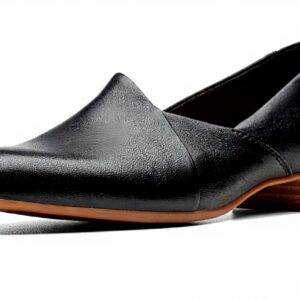
The Clarks Women’s Juliet Palm Loafers represent a specific school of thought in footwear design: comfort through cushioning and anatomical shaping rather than rigid support systems. They are unapologetically simple in silhouette – a classic penny loafer – but the technology is baked into the interior. The focus is on creating a forgiving, soft environment for the foot, which works brilliantly for many, but not for all.
| Specification | Details |
|---|---|
| Material | Premium Leather Upper, Synthetic Sole |
| Technologies | Contoured Comfort, Cushion Plus Inlay |
| Weight (per shoe) | 181.44 g (approx.) |
| Dimensions | 30.48 x 20.32 x 11.43 cm |
| Available Widths | Standard, Narrow, Wide |
| Key Use Cases | Office wear, casual daily use, travel |
Real-World Performance & Feature Analysis
Design & Build Quality
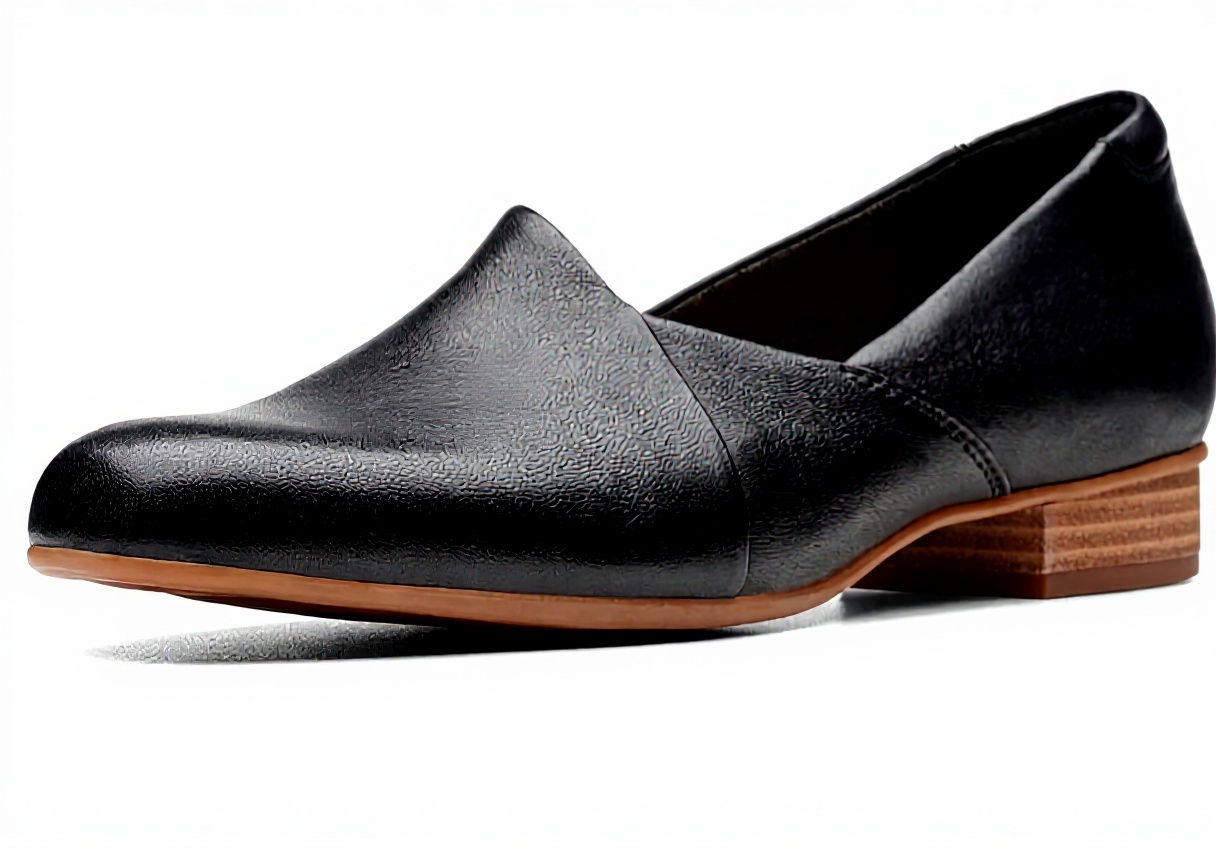
The first thing you’ll notice is that this isn’t fashion leather masquerading as quality. The full-grain leather used in the Juliet Palm is substantial and stiff out of the box, a clear indicator of its durability potential. Unlike cheaper bonded leather that cracks, this will develop a patina over time. The stitching on the moc-toe is even and tight, a small but critical detail that prevents early failure at a high-stress point. The hardware has a decent weight, avoiding the tinny feel of fast fashion alternatives.
The trade-off? That quality leather demands a break-in period of about 3-5 wears. During this time, you might experience some tightness across the top of your foot. This is normal, but it’s a crucial real-world consideration if you need shoes that are comfortable from the very first step. Once molded, the fit is like a second skin.
Performance in Real Use
Let’s move beyond the spec sheet and into two real scenarios:
Scenario 1: The Commuter & Office Day. From walking to the train station to standing on a crowded carriage and then sitting at a desk for 6 hours, these loafers excel. The Cushion Plus inlay is the star here. It’s a high-rebound foam that genuinely absorbs the shock of pavement pounding. Your feet feel less fatigued at the end of the day compared to flats with a simple fabric insole. However, if your office has polished concrete or slick tile floors, be mindful. The sole’s grip is adequate but not exceptional; you won’t be sliding, but you also won’t feel as planted as in a rubber-soled athletic shoe.
Scenario 2: A Day of Travel. I’ve worn these through airports and for light city exploration. The lightweight construction is a genuine benefit when every gram counts. The slip-on design is a lifesaver at security. Where they show their limits is on cobblestone streets or during full days of non-stop walking. The flexibility is good, but the lack of a rigid shank and more pronounced arch support means your feet and calves will work harder on uneven terrain than they would in a dedicated walking shoe.
Ease of Use & Fit
The availability of multiple widths is, in my professional opinion, the single biggest reason to consider Clarks over many competitors. Most women’s loafers are built on a standard, medium-width last. If you have narrow feet, you’ll experience heel slippage; if you have wide feet, you’ll feel pinching at the sides. The Juliet Palm’s narrow and wide options directly address this. My advice: If you’re between sizes or have any foot width peculiarity, order two sizes and widths to compare. Their fit is consistent but trying them on is non-negotiable.
Durability & Reliability
After several months of regular use, the wear pattern is telling. The sole shows minimal signs of balding, even on the outer heel – a common failure point. The stitching remains intact. The primary wear is superficial scuffing on the leather, which is easily addressed with a good leather conditioner and polish. This isn’t a shoe that will fall apart in a season. The construction is built for the long haul, assuming you’re not using them for hiking. The interior insole does compress over time (around the 9-12 month mark with daily use), at which point you can replace it with a new orthotic, effectively refreshing the shoe’s life.
Pros & Cons
Pros:
- Superior Width Sizing: A game-changer for those who can’t find a good fit off-the-rack.
- Genuine All-Day Cushioning: The Cushion Plus inlay makes a tangible difference in foot fatigue on hard floors.
- Durable Construction: The materials and stitching are built to last significantly longer than fast-fashion equivalents.
- Timeless Versatility: The classic loafer design seamlessly transitions from work to weekend.
Cons:
- Moderate Arch Support: The “Contoured Comfort” is gentle. Those with flat feet or high arches may need to add their own orthotics.
- Mandatory Break-In Period: The quality leather is initially stiff and requires a few wears to soften.
- Average Traction: The sole is fine for urban environments but lacks the grip for wet or uneven terrain.
- Price Point: At over £85, they are an investment compared to budget brands, though the value is justified.
Comparison & Alternatives
To truly understand the Juliet Palm’s place in the market, you must see it in context.
Cheaper Alternative: ASOS DESIGN Wide Fit Loafers (£35-£45)
- Value Difference: The ASOS option gives you the aesthetic for half the price. However, you sacrifice everything else: the leather is thin and prone to cracking, the insole is a flat piece of foam with no support, and the construction is not built for daily durability. The fit is also less precise.
- When to Choose: Only if your budget is extremely tight and you need a shoe for occasional, not daily, wear. The cost-per-wear of the Clarks is likely lower if you wear them regularly.
Premium Alternative: Cole Haan Originalgrand Penny Loafers (£150-£180)
- Value Difference: Cole Haan invests more in fashion-forward styling and often uses a lighter, more flexible sole unit derived from their athletic collaborations. The leather may be slightly softer out of the box. However, the core comfort technologies for all-day standing are often comparable, and you’re paying a significant premium for the brand name and design details.
- When to Choose: If budget is less of a concern and you prioritise cutting-edge style and a potentially faster break-in period. For pure comfort and durability value, the Clarks often wins.
Buying Guide / Who Should Buy
Making the right choice here depends entirely on your profile as a wearer.
Best For Beginners: If you’re new to investing in quality footwear, the Clarks Juliet Palm is a fantastic starting point. The brand is trustworthy, the fit is reliable, and you will immediately feel the upgrade from disposable fashion flats. They teach you what good construction feels like without a prohibitive price tag.
Best For Professionals & Commuters: This is the shoe’s sweet spot. If you need a reliable, polished, and comfortable shoe that can handle the journey to work, a day at the office, and an after-work drink, these are arguably one of the best-value options on the market. The durability means they won’t let you down during an important week.
Not Recommended For:
- Individuals with serious foot conditions like plantar fasciitis or requiring custom orthotics. While you can remove the insole, the shoe’s internal volume and inherent support may not be sufficient.
- Those seeking a true ‘walking shoe’ for tourism. The cushioning is good, but the support and grip are not specialised for that purpose.
- Anyone who needs instant, no-break-in comfort. The leather requires a short adaptation period.
FAQ
Are the Clarks Juliet Palm Loafers actually true to size?
For the majority of wearers, yes, they are true to length. However, the critical factor is width. If you have ever had issues with shoes being too loose or too tight on the sides, you should absolutely leverage the available narrow and wide fits. Order your usual size but in the appropriate width first.
Can I wear these without socks?
You can, and the leather is of a quality that will manage moisture reasonably well. However, for hygiene and to maximise the lifespan of the interior lining, I strongly recommend wearing them with no-show socks. This will also help during the break-in period to prevent blisters.
How do they compare to other Clarks loafers like the Orinoco?
The Orinoco has a more casual, moccasin-style construction with a softer, often suede or nubuck upper and a more flexible sole. It’s arguably more comfortable from the first wear but less polished for a formal office environment. The Juliet Palm offers a more structured, professional look and typically uses harder-wearing leather.
Is the £87 price tag justified?
Based on the materials, construction quality, comfort technology, and width options, yes. This is not an inflated price for a brand name. You are getting a well-engineered product designed for long-term use. When you calculate the cost-per-wear over a year or two versus a £40 pair that falls apart in six months, the Clarks represent solid value.
What is the single biggest reason to avoid these shoes?
The single biggest reason would be if you have been specifically advised by a podiatrist to wear shoes with significant, structured arch support. The Contoured Comfort in these is a gentle shaping, not a medical-grade support system. For everyone else, they are a highly competent and recommended choice.