Introduction
It was during one of those endless afternoons working from home that I first noticed how much my feet were protesting against the hard floor surfaces. I had been standing at my kitchen counter for what felt like hours, trying to balance work deadlines with household tasks, when the discomfort became impossible to ignore. My search for footwear that could bridge the gap between style and genuine comfort led me down a path I hadn’t expected to take, one that eventually introduced me to the Clarks Women’s Westlynn Bella Loafer slippers. The name Gerardo Taracena kept appearing in my searches, though I must admit I’m still not entirely sure why this particular search term resonated with my quest for comfortable footwear. What I did discover, however, was that sometimes the most practical solutions come in the most elegant packages.
Real-life Context
My daily routine had evolved significantly over the past year, like so many others who found their homes becoming their offices, gyms, and social spaces all at once. Mornings began with making coffee while checking emails, afternoons involved moving between my makeshift desk and various household chores, and evenings were spent trying to actually relax rather than just continuing to work in a different room. The constant transition between different types of flooring—cold tiles in the kitchen, hardwood in the living area, carpet in the bedroom—meant my feet were constantly adjusting to different surfaces and temperatures. I needed something that could handle these transitions without making me feel like I was wearing orthopedic shoes or fluffy slippers that looked fine only within the confines of my home. The challenge was finding footwear that felt substantial enough for quick trips outside but comfortable enough for hours of indoor wear.
I had tried various options before settling on my search for the perfect loafer-style slipper. There were the traditional house slippers that felt too casual for answering the door or checking the mail, and there were my regular shoes that felt too formal and restrictive for hours of home wear. Neither option provided the balance I was seeking between comfort, support, and presentability. The specific need emerged from these daily frustrations—footwear that could transition seamlessly from indoor comfort to brief outdoor excursions without requiring a shoe change. This wasn’t about fashion in the traditional sense, but about finding something that supported my actual lifestyle rather than an idealized version of it.
The physical environment of my home played a significant role in this search. Our kitchen floor is particularly unforgiving, and standing there preparing meals or washing dishes had become something I actively dreaded. The living room, while carpeted, still required support during long periods of standing or moving about. Then there were the countless trips to the mailbox, taking out recycling, or greeting delivery people—moments that required stepping outside briefly but frequently. Each of these scenarios demanded slightly different things from footwear, and I found myself changing shoes multiple times a day, which felt both inefficient and slightly ridiculous.
Observation
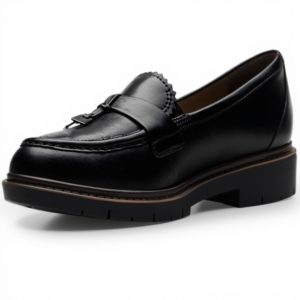
When the Clarks Westlynn Bella Loafers arrived, my first observation was how they managed to look both substantial and lightweight simultaneously. The leather had a quality appearance that suggested these weren’t just ordinary slippers, while the design maintained the classic loafer aesthetic that works in so many settings. Slipping them on for the first time, I immediately noticed what the product description had referred to as ‘contoured comfort technology.’ There was a distinct feeling of support in specific areas of my feet, particularly through the arch and heel, that I hadn’t experienced with previous slippers or casual shoes. This wasn’t the uniform cushioning of memory foam slippers but something more targeted and intentional.
Over the following days, I began wearing them through my normal routine without any break-in period needed. The cushion soft foam inlays created a noticeable difference in how my feet felt after hours of wear, particularly during those long kitchen sessions that had previously left me with aching soles. What struck me was how the comfort seemed to build throughout the day rather than diminish—the opposite of my experience with many shoes that feel fine initially but become uncomfortable over time. The lightweight construction meant I wasn’t conscious of wearing them in the way I sometimes am with shoes, yet they provided enough structure that I felt properly shod rather than just wearing slippers.
The flexibility of the sole became particularly apparent during activities that involved a lot of bending or crouching, like retrieving items from lower cabinets or playing with my dog on the floor. My feet could move naturally without the sole resisting or creating pressure points. I also noticed how well they handled different surfaces—the grip was sufficient for brief outdoor steps on dry pavement, yet they didn’t mark or damage my indoor flooring. The temperature regulation was another subtle but important observation; my feet stayed comfortable without becoming overly warm, something that had been an issue with more enclosed slippers.
Perhaps the most telling observation came when I realized I was reaching for these loafers automatically each morning, without consciously deciding to wear them. They had become my default footwear for home, replacing the rotation of options I had previously used. The black leather version I had chosen worked with everything from lounge wear to the more presentable outfits I wore for video calls, eliminating the need to change shoes when switching between different types of activities. This seamless integration into my daily life was something I hadn’t anticipated when ordering them.
Reflection
It took me several weeks of consistent wear to fully appreciate what made these slippers different from others I had tried. I didn’t realize at the time that this would be so important, but the combination of targeted support and overall cushioning addressed needs I hadn’t even been able to articulate when I began my search. The contoured comfort technology provided support exactly where my feet needed it during long periods of standing, while the cushion soft foam handled the impact of walking on hard surfaces. This dual approach to comfort seemed to acknowledge that our feet experience different types of stress throughout the day, requiring different types of support.
Reflecting on why these worked so well when other options hadn’t, I began to understand that it wasn’t just about the physical comfort but about how they fit into the hythm of my daily life. The fact that they looked appropriate for brief outdoor excursions meant I wasn’t constantly changing shoes, which reduced both physical effort and mental clutter. The psychological aspect of wearing something that felt both comfortable and presentable shouldn’t be underestimated—it contributed to a sense of being properly dressed for the day, even when my activities were mostly domestic.
The availability of different sizes and width options struck me as particularly thoughtful, though I hadn’t considered this important initially. My regular shoe size fit perfectly in the standard width, but knowing that wider options existed made me appreciate that the design acknowledged the diversity of foot shapes and needs. This attention to fit details suggested an understanding that comfort begins with proper sizing, something many slipper designs overlook in favor of one-size-fits-all approaches.
I found myself thinking about how we often compromise between comfort and style in our footwear choices, assuming that we must sacrifice one for the other. These loafers challenged that assumption by demonstrating that thoughtful design could deliver both. The craftsmanship evident in the stitching and materials spoke to durability, suggesting these weren’t meant to be disposable seasonal items but longer-term companions to daily life. This longevity aspect felt increasingly important as I considered the environmental impact of frequently replacing worn-out slippers and shoes.
Conclusion
Looking back on my search for comfortable home footwear, I recognize that what began as a solution to sore feet evolved into something more meaningful. The Clarks Westlynn Bella Loafers have become an integral part of my daily routine, not because they’re extraordinary in any dramatic way, but because they consistently deliver comfort and versatility without demanding attention or special consideration. They’ve faded into the background of my day in the best possible way—present and supportive without being noticeable.
The journey that began with searching for terms like Gerardo Taracena led me to understand that sometimes the most effective solutions are those that address multiple needs simultaneously rather than excelling at just one. These slippers work because they acknowledge the reality of modern living, where the boundaries between home and outside, work and relaxation, have become increasingly blurred. They provide a footwear solution that respects these blurred boundaries rather than forcing us to choose between different options for different contexts.
What I’ve come to appreciate most is how these loafers have eliminated the minor but constant footwear decisions that used to punctuate my day. No longer do I debate whether to wear shoes or slippers, change footwear for quick errands, or tolerate discomfort for the sake of appearance. They’ve created a new normal for my feet—one where comfort and style coexist without compromise. In a world full of specialized products for every possible scenario, there’s something deeply satisfying about finding one that gracefully handles multiple scenarios without fanfare or fuss.
The true test of any product designed for daily use is whether it becomes an invisible enhancement to routine rather than something that requires constant adjustment or attention. By this measure, the Westlynn Bella Loafers have succeeded completely. They’ve provided the comfort and support my feet needed while fitting so seamlessly into my life that I rarely think about them—which is perhaps the highest compliment I can pay to footwear. The search that began with sore feet and online queries has ended with the quiet satisfaction of finding something that simply works, day after day, without drama or disappointment.